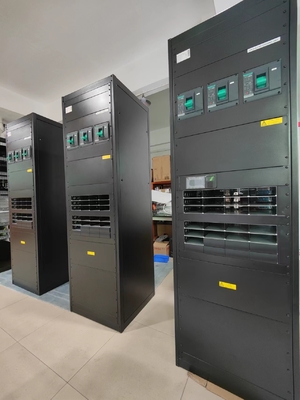
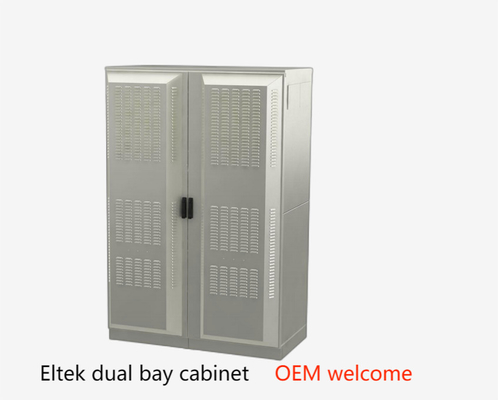
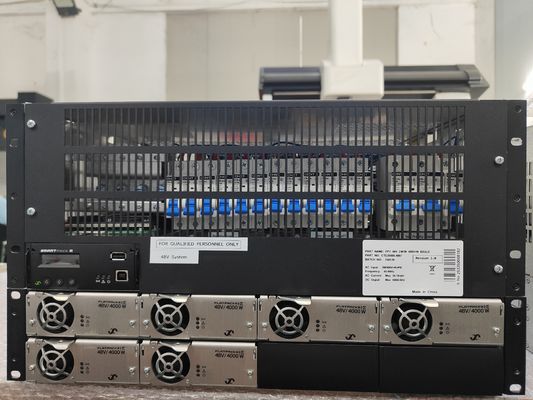
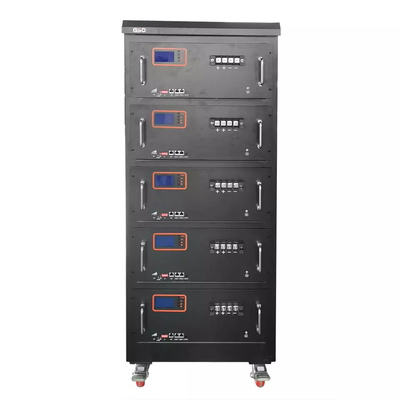
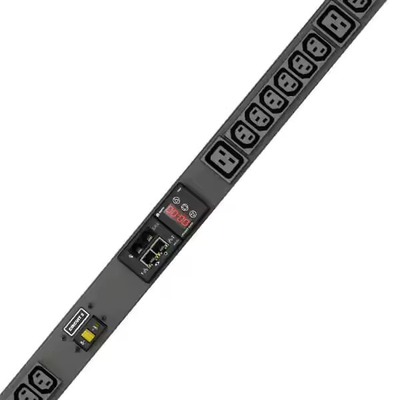
In the automated workflows of modern power utility substations, microcomputer protection relays, remote terminal units (RTUs), and high-frequency communication buses maintain a critical reliance on high-quality AC power. When traditional utility inverters sustain hardware degradation, their intricate point-to-point wiring and monolithic structural constraints lead to highly convoluted, time-consuming field repair workflows. This dependency elongates the Mean Time to Repair (MTTR) and places secondary substation automation on the precipice of catastrophic power delivery failure. This technical analysis explores how deploying hot-swappable modular inverter technology minimizes system MTTR to reinforce AC backup power paths.
Lifecycle Maintenance and Operational Friction in Centralized Utility Power Systems
Traditional substations rely on single mass-capacity, centralized inverter designs. If internal power electronic components, such as insulated-gate bipolar transistor (IGBT) modules or firing gate drive boards, break down due to prolonged electrical or thermal grid stress, the entire inverter stage goes completely offline. The substation is then forced to engage static bypass mode, exposing business-critical secondary monitoring equipment to raw, unconditioned utility grid paths thick with electromagnetic interference.
Within a centralized topology, internal cabling is intertwined and interlocked with the substation’s 48Vdc station battery bus and local auxiliary AC systems. Consequently, standard substation maintenance operators cannot perform discrete component-level replacements. The facility must wait for specialized field application engineers to travel to often remote substation sites with proper diagnostics tools and matching hardware components. The resultant recovery process—comprising grid decoupling, tedious rewiring, physical weight extraction, re-mounting, and extensive parameter commissioning—typically extends across several days. This extended repair loop (elevated MTTR) represents a highly dangerous vulnerability in utility operations.
How Hot-Swappable Architectures Engineering Zero-Downtime Substation Operations
Integrating hot-swappable modular inverter systems delivers the necessary industrial blueprint to eliminate MTTR bottlenecks in power substations. By implementing a decentralized, highly scalable mechanical infrastructure, total output capacity is distributed across individual, blind-mate parallel inverter modules.
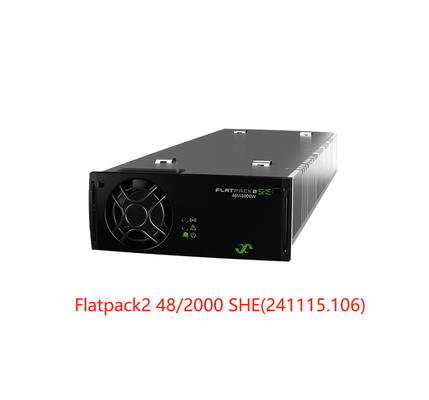
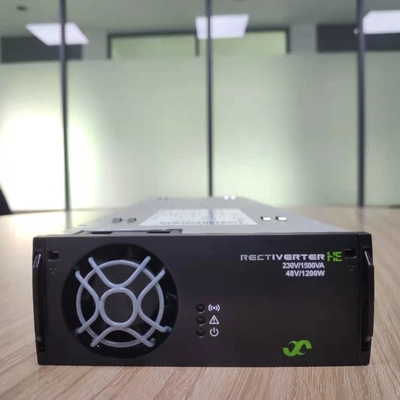
When the substation's centralized automated control center (via an intelligent supervision gateway utilizing Inview protocols) flags a specific inverter module malfunction, onsite substation personnel can serve as immediate first responders. Because individual modules utilize a toolless, slide-in structural interface and weigh approximately 4.3 kg, field operators can extract the compromised unit without advanced toolsets. Critically, this replacement happens while the system remains fully live and operational (Live System Operation), without forcing a bypass transfer or cutting power to sensitive AC loads. The operator simply pushes a spare module of identical specification into the chassis slot, allowing internal digital control loops to calibrate, grid-tie, and synchronize into the parallel bus within seconds. This process reduces actual substation MTTR from a multi-day window down to a few minutes.
Critical Inverter Selection Benchmarks for Demanding Utility Environments
To ensure long-term consistent performance against severe electrical surges and ambient temperature fluctuations, engineering procurement teams executing substation AC backup retrofits must enforce strict empirical design criteria:
· Extended Hardware Operational Lifespans (High MTBF): Individual inverter modules must be rated via standardized military reliability protocols. At an ambient temperature of 30°C and 80% continuous running load, the single-module MTBF evaluated under the MIL-217-F standard must exceed 240,000 hours to minimize hardware failure probabilities.
· High-Voltage Insulation and Dielectric Strength: Because substations are high-frequency lightning and switching surge environments, the inverter system must isolate distinct circuits. The dielectric strength between the DC input and AC output paths must hold a certified rating of 4300 Vdc to prevent high-voltage faults from breaching sensitive low-voltage control layers.
· Robust Input and Output Regulation Tolerances: When the station's DC battery bus experiences deep charge/discharge sags between a wide range of 32 Vdc to 63 Vdc, the inverter's AC output steady-state voltage stability must be locked within ±1%. During sudden 0% to 100% transient load impacts, the dynamic voltage regulation must stay below <5% and recover fully within 100 ms.
· Environmental Survivability and Enclosure Protection: Substation inverter hardware must be rigorously qualified against ETS300-019-2-3 Class 3.1 (operational testing) and ETS300-019-2-2 Class 3.1 (transportation testing). The system must maintain consistent pure sine wave delivery across a temperature range of -20°C to 65°C (with derating enforced above 40°C) and withstand up to 96 hours annually of 95% non-condensing relative humidity.


 Your message must be between 20-3,000 characters!