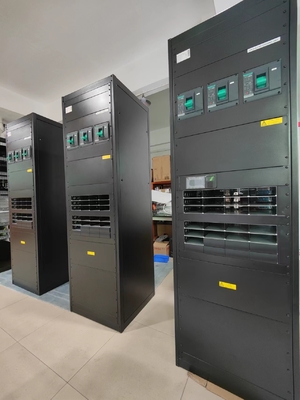
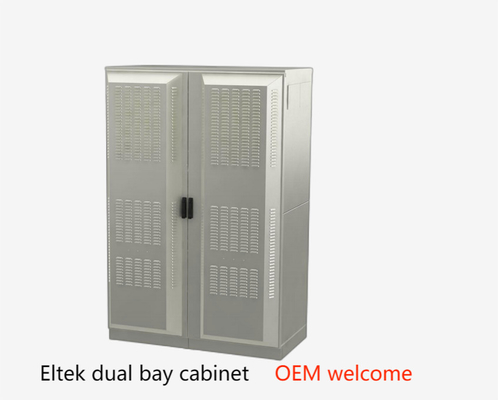
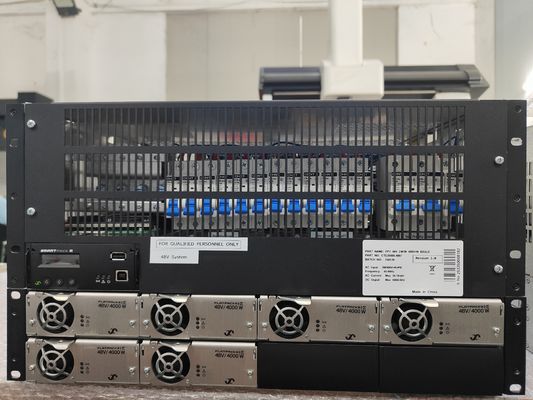
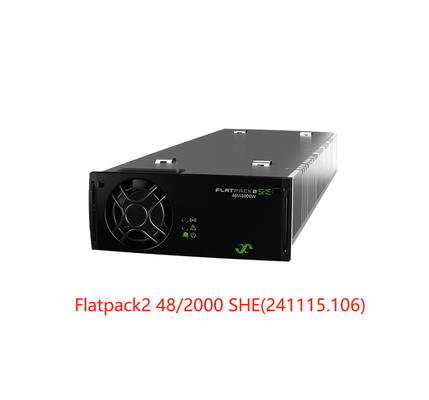
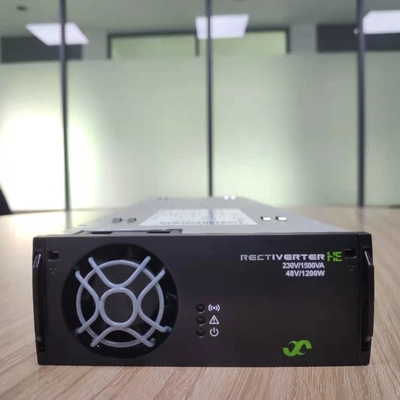
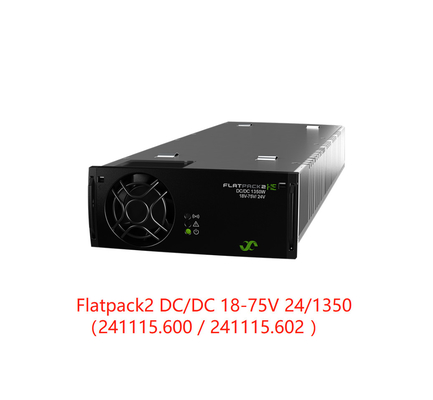
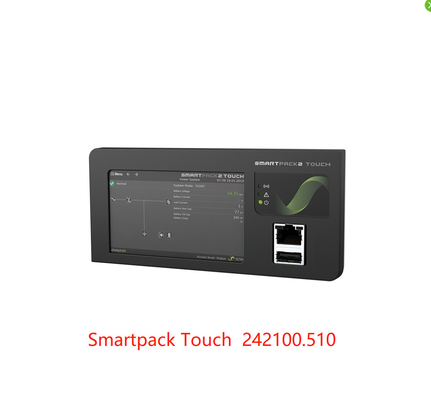
In the telecommunications industry, power system efficiency is often touted at its "peak" (typically 96% to 98%). However, for network operators in regions with fluctuating traffic, such as emerging markets in Africa or South America, the real challenge isn't peak performance—it's light-load efficiency. When a 3-phase telecom power system operates at 10% to 30% of its rated capacity, efficiency often plummets, leading to significant energy waste and increased thermal stress.
Understanding the "Efficiency Trap" in 3-Phase Systems
Most 3-phase rectifier modules are designed for optimal performance at 50% to 75% load. In a standard 5G base station or a regional data center, traffic follows a "sinusoidal" pattern. During midnight or low-traffic hours, the power demand drops.
Traditional systems keep all rectifier modules active, regardless of the load. This leads to Fixed Power Loss, where the internal components (transformers, cooling fans, and switching circuits) consume power just to stay operational. For a large-scale telecom room, this cumulative "idle" waste can account for a substantial portion of the monthly electricity bill.
Technical Solution: Intelligent Module Sleep Technology
To address this, high-performance 3-phase telecom power systems now incorporate Intelligent Module Sleep (IMS) technology. This is not a simple power-down; it is a sophisticated management logic that optimizes the system’s duty cycle.
1. Dynamic Load Mapping
The system controller monitors the total load demand in real-time. If the total load is low enough to be handled by a single module at its peak efficiency point (e.g., 60% load), the controller instructs the redundant modules to enter a "Deep Sleep" or "Standby" mode.
2. Efficiency Curve Maximization
By concentrating the load onto fewer modules, the active units operate within their 97% efficiency window instead of struggling at a 20% load where efficiency might drop below 90%. This ensures that even during low-traffic periods, the system maintains a high energy-to-power conversion ratio.
3. Rotation Logic for Longevity
A common concern with module sleep is the uneven aging of hardware. Advanced systems use Cyclic Rotation Logic. The controller tracks the operating hours of each module and rotates the "active" and "sleep" roles. This ensures that all components reach their rated MTBF (Mean Time Between Failures) simultaneously, simplifying maintenance cycles.
Selection Criteria for Efficiency-Focused Procurement
When evaluating a 3-phase system (380V/415Vac to -48Vdc), technical buyers should look beyond the "Peak Efficiency" sticker. The following parameters provide a clearer picture of real-world performance:
· Efficiency at 20% Load: Request the efficiency curve data. A top-tier system should maintain at least 94-95% efficiency even at low loads.
· Total Harmonic Distortion (THD) at Light Load: Many rectifiers produce significant electrical noise when underloaded. Ensure THD remains <5% to protect sensitive downstream -48V equipment.
· Wake-up Latency: The system must be able to "wake up" sleeping modules in milliseconds if a sudden spike in traffic occurs, preventing voltage dips.
The Impact of High-Efficiency Standards (IEC 61000-3-2)
Operating efficiently at light loads is not just about saving money; it’s about grid compliance. Systems with high Power Factor Correction (PFC > 0.99) ensure that the 3-phase input remains balanced. This is critical in the infrastructure of the Middle East and Africa, where weak power grids are sensitive to the reactive power generated by inefficient, underloaded power supplies.
Summary: Designing for the Future of 5G
As 5G densification continues, the number of "small cells" and "edge sites" increases. These sites are frequently underloaded. By selecting a 3-phase telecom power system with robust low-load management and N+1 modular redundancy, operators can ensure 24/7 reliability while minimizing the "hidden costs" of energy loss.


 Your message must be between 20-3,000 characters!