1. Industry Context: Rapid Digital Growth and Cabinet Space Constraints in Southeast Asia
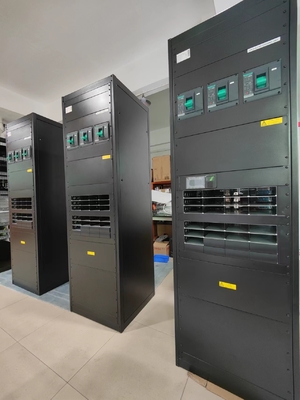
Southeast Asia is experiencing accelerated digital transformation, driven by surging mobile data traffic and expanding 4G/5G infrastructure. To meet increasing bandwidth demands, regional operators must continuously add active transmission and radio equipment to cell sites and edge facilities. However, most existing telecom shelters and outdoor cabinets across Southeast Asia face severe physical space constraints, with standard 19-inch racks heavily populated by core communication hardware.
During network expansion, legacy DC power systems with low power density cannot scale capacity within the existing footprint. Adding supplementary power cabinets is often unfeasible due to site space limitations, while also prolonging deployment timelines and increasing rental costs. Consequently, enabling live, online power scaling within existing rack space without service disruption has become a key technical criterion for Southeast Asian operators.
2. Key Selection Criteria: Technical Advantages of High-Density 19-Inch Rack Systems
To achieve high-capacity power scaling in space-constrained cabinets, telecom engineering and procurement teams prioritize modular DC power systems built on high power density and advanced electrical design:
-
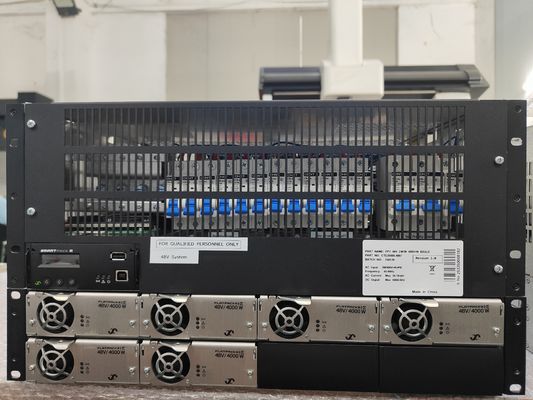
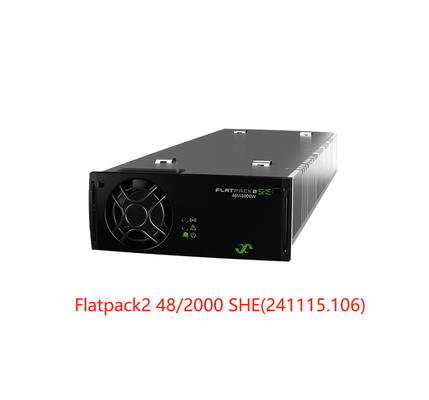
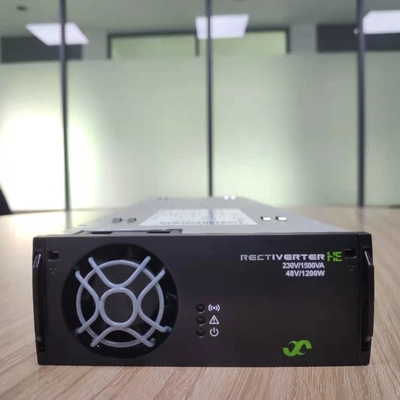
Compact 1U Profile and High Power Density: Utilizing 1U-high 48V/2000W modular rectifiers (measuring $109 \times 41.5 \times 327 \text{ mm}$), operators can achieve high-density parallel deployments in standard 19-inch racks. This ultra-compact architecture allows flexible scaling from 2kW up to 192kW within the same system family, maximizing cabinet U-space utilization.
-
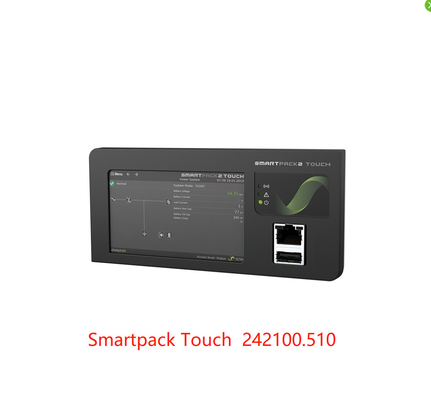
Hot-Swappable Plug-and-Play Integration: Integrated digital controllers enable live, tool-free hot plugging of rectifier modules while the DC system is fully powered. Upon insertion, the controller automatically recognizes the module, assigns an ID, and syncs system parameters. This guarantees zero interruption to downstream active loads during capacity additions.
-
Wide Voltage Range and Mains Protection: To handle severe grid fluctuations and lightning transients common in Southeast Asia, the system supports a wide input range of 85–300 VAC with automatic disconnect protection above 300 VAC, complemented by input varistor protection for continuous operation.
3. Operational Reliability: Thermal Management and TCO Optimization
High-density electronic packaging in tropical climates demands efficient thermal dissipation.
Equipped with temperature-regulated, front-to-back forced airflow cooling, modern modular rectifiers operate across a wide temperature envelope from -40°C to +75°C. At temperatures above 55°C, intelligent thermal derating maintains continuous power output without triggering abrupt system shutdowns. Supported by a verified Mean Time Between Failures (MTBF) exceeding 350,000 hours (per Telcordia SR-332 standards), this architecture reduces site visits, minimizes Mean Time to Repair (MTTR), and optimizes long-term Total Cost of Ownership (TCO).
4. Conclusion and Implementation Strategy
To support rapid telecom expansions across Southeast Asia, adopting high-density, 1U modular 19-inch rack DC power systems provides an efficient and scalable solution. Network planners should evaluate equipment based on power density per rack unit, hot-swap inrush management, high-temperature derating thresholds, and international safety compliance to ensure a resilient power foundation for expanding digital networks.


 Your message must be between 20-3,000 characters!