As global telecommunications networks rapidly transition from 4G to 5G, operators are facing an unprecedented power infrastructure crisis. The power consumption of a 5G Massive MIMO AAU (Active Antenna Unit) is significantly higher than its 4G predecessors, often leading to immediate "current shortfalls" at existing sites. In this evolving landscape, the ability of a Telecom Hybrid System to provide seamless, modular scaling has become the primary metric for site viability and future-proofing.
The 5G Power Gap: Identifying the Current Bottleneck
The upgrade to 5G is not merely a software update; it is a heavy-duty hardware overhaul that puts immense strain on the DC power plant. Operators frequently encounter three critical technical hurdles during expansion:
· Insufficient Current Output: Many legacy systems were designed for 100A–200A loads. A fully loaded 5G site can easily exceed 400A, causing existing rectifiers to run at damagingly high thermal loads or trigger over-current protection.
· Voltage Drop Challenges: Higher currents lead to increased voltage drops across the DC busbars. If the system cannot maintain a stable -48V DC (within the standard -40V to -58V range), sensitive 5G radio equipment may restart or lose signal integrity.
· Physical Space Constraints: Adding additional power cabinets to accommodate more rectifiers is often impossible in high-rent urban rooftop sites or crowded indoor equipment rooms.
Technical Core: Enabling Seamless "Pay-as-you-grow" Scaling
Modern 16kW–24kW Telecom Hybrid Systems solve the current shortfall by decoupling power capacity from physical footprint. To ensure a smooth transition, three technical features are non-negotiable:
1. Modular "Hot-Swap" Rectifier Architecture
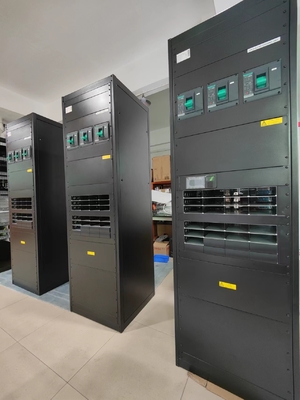
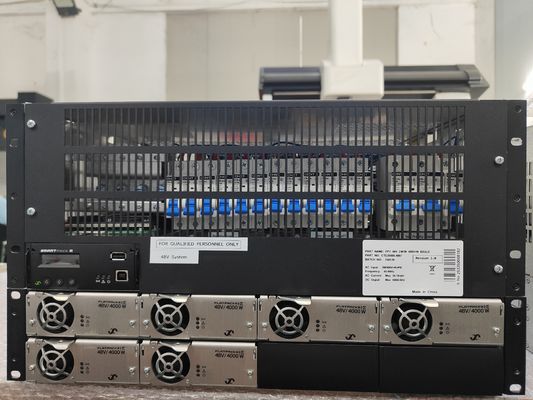
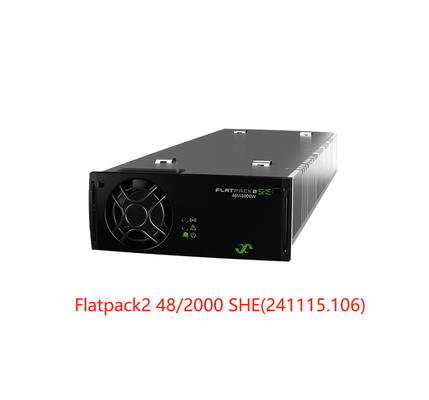
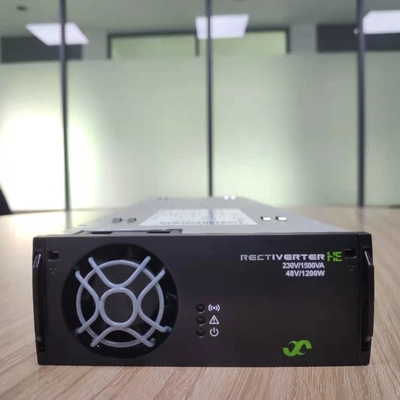
The most effective way to address current shortfalls is through modularity. High-density hybrid systems feature a 19-inch subrack capable of housing multiple 3000W or 4000W rectifiers. When 5G traffic grows, maintenance teams can perform "hot-swapping"—inserting additional modules into pre-wired slots without powering down the site. This allows the system current to scale from 300A to 600A+ with zero downtime.
2. Intelligent Peak Shaving via Lithium Integration
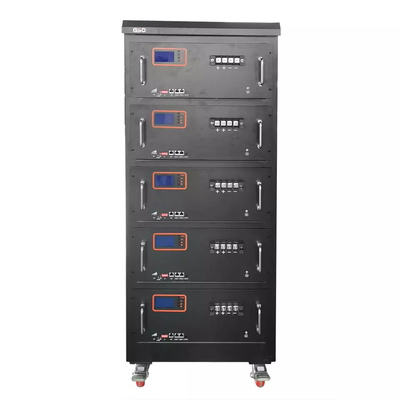
In many locations, the local AC grid connection is the limiting factor. A smart Telecom Hybrid System uses its integrated lithium battery bank to "shave" the peaks of 5G power demand. During peak traffic hours, when the AAU load exceeds the grid's rectifier capacity, the system intelligently draws supplementary current from the batteries. This avoids the massive OPEX hit of upgrading the site's transformer or utility mains.
3. High-Density Distribution and Branch Management
Scaling current isn't just about generation; it’s about distribution. Next-gen systems utilize high-conductivity copper busbars and granular DC Distribution Units (DCDU). By implementing prioritized Low Voltage Disconnect (LVD) levels, the system ensures that 5G core loads receive dedicated, high-current branches, preventing a single faulty auxiliary circuit from tripping the entire site's power.
Selection Guide: Key Metrics for 5G Expansion Readiness
When evaluating a system for 5G-ready deployment, procurement teams should prioritize the following parameter-backed specifications:
|
Scalability Metric
|
Recommended Specification
|
Impact on 5G Evolution
|
|
Power Density
|
≥ 40W/inch³
|
Maximizes current output within existing cabinet space.
|
|
Max Slot Capacity
|
6 to 8 Rectifier Slots
|
Ensures the system can scale to 24kW as 5G traffic matures.
|
|
Busbar Rating
|
600A - 800A (Minimum)
|
Prevents thermal bottlenecks and voltage drops at high loads.
|
|
BMS Parallelism
|
Supports 16+ Battery Packs
|
Provides the necessary discharge current for high-power 5G bursts.
|
Industry Insight: The Shift Toward Software-Defined Power
The industry is moving toward "Software-Defined Power" (SDP). In this model, the Telecom Hybrid System communicates directly with the RAN (Radio Access Network) to predict traffic spikes. By anticipating a rise in current demand, the system can pre-cool its modules or adjust battery discharge rates, ensuring that the 5G expansion is handled with maximum electrical and thermal efficiency.
Conclusion
Solving the current shortfalls of 5G expansion requires a shift away from static, oversized power plants toward agile, modular Telecom Hybrid Systems. By focusing on modular scalability and intelligent energy orchestration, operators can protect their 5G investments and ensure a seamless path to high-speed connectivity without the need for costly, disruptive infrastructure overhauls.


 Your message must be between 20-3,000 characters!