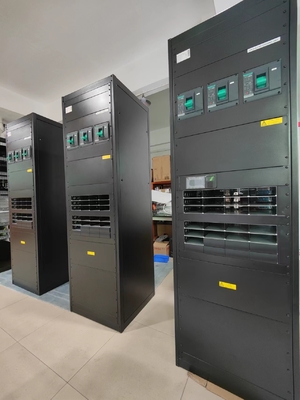
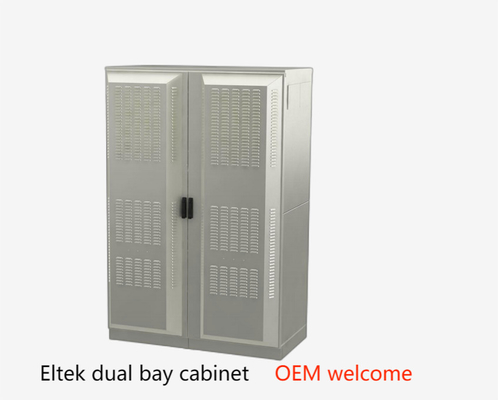
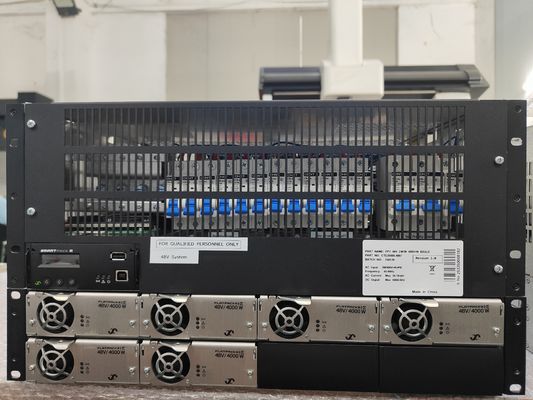
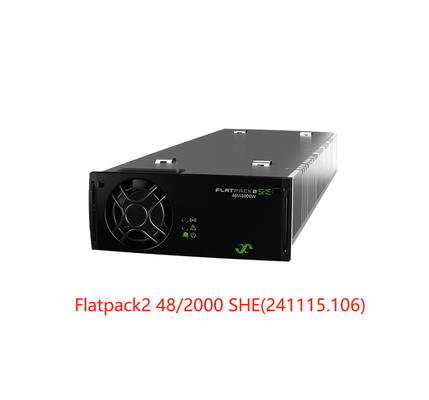
In the complex ecosystem of railway and transit infrastructure, the stability of the power distribution grid is paramount. Unlike standard commercial buildings, rail networks integrate high-voltage traction systems with sensitive low-voltage signaling and communication equipment. The transition to Balanced 3-Phase Telecom Power Systems (380V/415Vac to -48Vdc) has become a critical technical strategy for protecting these heterogeneous grids from electrical instability and harmonic pollution.
The Challenge of Phase Imbalance in Rail Distribution
Traditional signaling power often relied on single-phase AC taps. As the power density of modern communication systems (such as LTE-R and GSM-R) increases, single-phase loads create significant Phase Imbalance. This imbalance leads to several technical risks in a rail environment:
1. Neutral Line Overheating: Unbalanced loads cause current to flow through the neutral conductor, leading to heat buildup and potential fire hazards in trackside bungalows.
2. Transformer Inefficiency: Distribution transformers operating under unbalanced conditions suffer from increased core losses and reduced operational lifespan.
3. Signal Interference: Voltage fluctuations caused by unbalanced phases can introduce "noise" into sensitive signaling circuits, potentially leading to false occupancy detections or communication lag.
Technical Advantage: The Balanced 3-Phase Approach
A modern 3-phase telecom power system draws power equally from all three phases (L1, L2, L3). This balanced consumption ensures that the transit grid remains symmetrical, maximizing the efficiency of the upstream distribution infrastructure.
1. Active Power Factor Correction (APFC)
Top-tier 3-phase systems utilize advanced APFC technology to achieve a Power Factor (PF) of ≥0.99. For rail operators, this means the "reactive power" is minimized. By ensuring that the current and voltage waves are in phase, the system reduces the stress on the rail power network, allowing more equipment to be connected to the same transformer without exceeding its KVA rating.
2. Mitigation of Total Harmonic Distortion (THD)
Railway signaling is highly susceptible to electromagnetic interference (EMI). Systems compliant with IEC 61000-3-2 maintain a THD of ≤5%. By suppressing harmonic currents, these power systems prevent the "pollution" of the AC grid, ensuring that the power quality remains clean for other critical transit components, such as automated fare collection (AFC) and passenger information systems (PIS).
Engineering for Resilience: Redundancy and Surge Protection
In transit infrastructure, a power failure is not just a downtime issue—it is a safety risk. Selecting a system requires specific focus on "Hardened" parameters:
N+1 Modular Redundancy
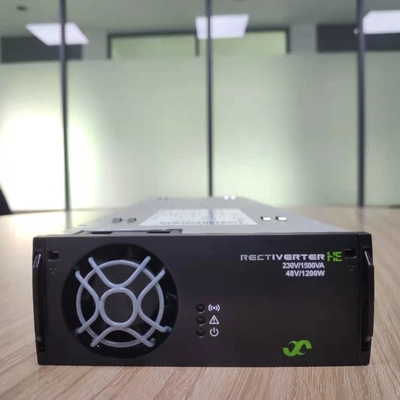
A modular 3-phase system ensures that even if one rectifier module fails, the balanced load distribution across the remaining modules continues. This Hot-Swappable architecture allows maintenance teams to replace modules during active rail service hours without shutting down the signaling network, a vital feature for 24/7 urban metro systems.
Extreme Surge Suppression
Railways are often expansive networks in open environments, making them lightning magnets. Integrating 20kA to 40kA surge protection (SPD) within the 3-phase power system is essential. This protects the -48Vdc output from high-voltage transients that travel through the rails or overhead catenary lines during atmospheric disturbances.
Selection Guide: Key Metrics for Transit Procurement
For engineers drafting specifications for rail transit power, the following "Parametric Truths" should be prioritized:
· Input Range Stability: Requirement for a wide input window (e.g., 305Vac to 520Vac L-L) to handle the volatile voltage swings typical of rail power grids.
· Efficiency at Scale: A peak efficiency of ≥96% is necessary to reduce the thermal footprint in confined trackside cabinets, where cooling options are limited.
· Operating Temperature: Must maintain full load capacity between -40°C and +75°C to withstand the diverse environmental conditions of transit tunnels and outdoor platforms.
Summary: A Foundation for Modern Rail Safety
The integration of a Balanced 3-Phase Telecom Power System is more than a technical upgrade; it is a grid-stabilization strategy. By eliminating phase imbalance and suppressing harmonics, rail operators can ensure that their critical signaling and communication infrastructure operates on a clean, reliable, and efficient electrical foundation.


 Your message must be between 20-3,000 characters!