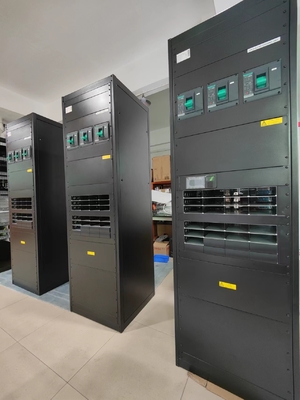
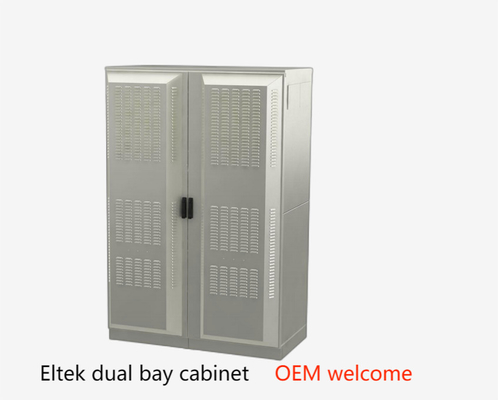
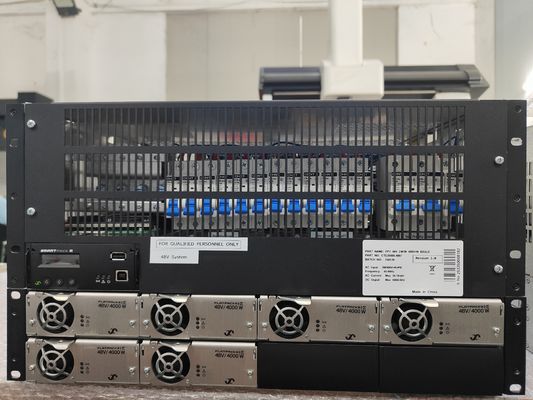
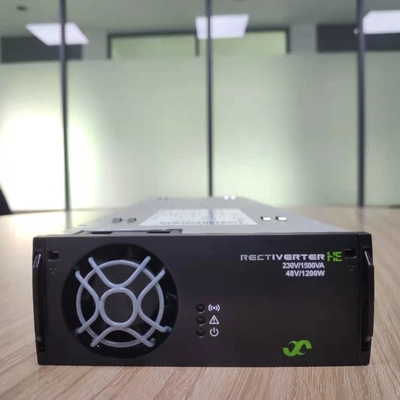
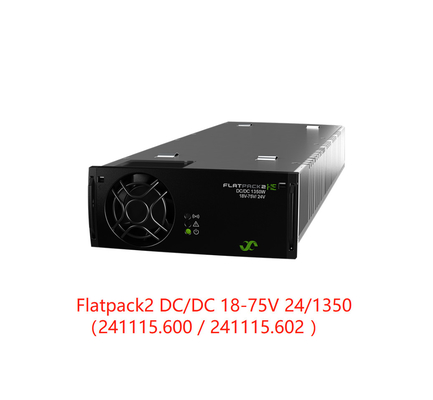
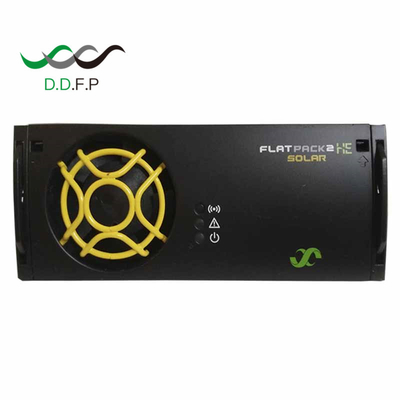
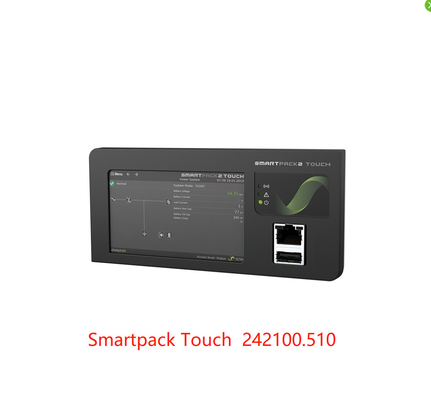
In major South American metropolitan areas like São Paulo and Buenos Aires, 5G network upgrades and 4G densification are facing severe physical space constraints. Operators are frequently required to add more communication loads within existing, fully-loaded cabinets without replacing the entire infrastructure. This article provides a selection guide on how the Flatpack2 48V SHE rectifier, leveraging its 33 W/IN³ power density, empowers operators to overcome cabinet space bottlenecks.
Industry Insights: The "Space Crisis" in Urban Cell Sites
Urban sites in South America are often located on rooftops or busy street corners, where leasing costs are high and expansion is difficult.
- Cabinet Saturation: Legacy power modules are often bulky, occupying over 30% of the vertical rack space. When 5G upgrades require an additional 3-5kW of power, legacy cabinets have zero margin.
- Thermal Constraints: High-density deployment typically leads to heat accumulation. If power modules are inefficient, dense stacking will quickly exceed internal temperature limits.
Selection Guide: The Industrial Value of High-Density Power
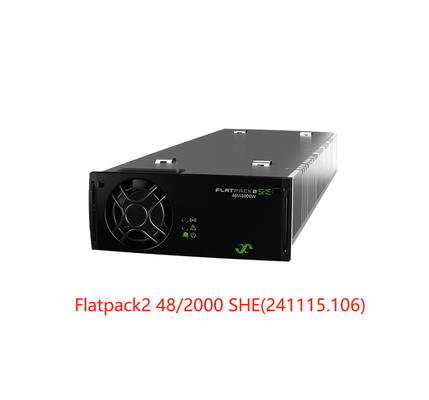
For space-constrained projects, equipment selection must prioritize "Power per Unit Volume." The Flatpack2 48V SHE offers specific advantages:
1. High Power Density of 33 W/IN³
As specified in the technical documentation, this module delivers up to 3000W of output within a compact 1U height (41mm). This extreme power-to-size ratio means operators can deploy twice the power capacity in the same rack space compared to legacy modules, freeing up critical room for 5G Baseband Units (BBU) and Remote Radio Units (RRU).
2. "Zero Downtime" Seamless Expansion Strategy
The module features Hot Pluggable functionality and is fully compatible with existing Flatpack2 system backplanes. This translates to:
- No Rewiring Required: Simply swap legacy modules for SHE modules.
- Online Upgrades: Complete capacity expansion without service interruption, which is vital for high-traffic urban centers.
3. Minimal Heat Loss Facilitating "Compact Stacking"
The biggest risk of high-density installation is thermal buildup. Thanks to its 97.8% ultra-high efficiency, the SHE module generates approximately 50% less internal heat than standard rectifiers. This allows for tight vertical stacking without the need for excessive air gaps, further maximizing rack utilization.
Technical Validation: Core Reliability Metrics
Beyond space optimization, the module demonstrates superior electrical quality for urban grids:
- Output Stability: Static regulation precision of ±0.5% and dynamic load response time of <50ms ensure steady input voltage for precision 5G hardware during peak traffic bursts.
- Safety Compliance: Adherence to EN 62368-1 standards ensures electrical safety in densely populated urban environments.
Conclusion
For South American urban operators, the Flatpack2 48V SHE is the optimal choice for addressing expansion pain points. It is not merely a power component but a strategic tool for managing infrastructure scarcity. By combining high power density with minimal thermal dissipation, it enables the smooth evolution of existing cell sites into the 5G era.


 Your message must be between 20-3,000 characters!