In the construction of modern distributed data centers and edge computing nodes, achieving balanced power distribution and terminal voltage stability represents two core operational bottlenecks. Due to the significant distance between decentralized functional zones and the central power source, traditional low-voltage DC distribution often suffers from significant voltage drift caused by line drops, which directly compromises the lifespan of precision communication hardware.
The Voltage Drop Challenge in Distributed Architectures
In large-scale or multi-story decentralized facilities, the extension of power transmission paths leads to a non-linear increase in internal resistance losses.
· Voltage Offset Risks: Under traditional 48V DC cabling, the actual voltage received at the terminal load may drop below operational thresholds (e.g., <42V), triggering system reboots or packet loss.
· Thermal Management Pressure: Power dissipated through line voltage drops is converted into waste heat, increasing the cooling requirements around cable trays and distribution zones.
380V to 54V Systems: The Technical Path to Precision Regulation
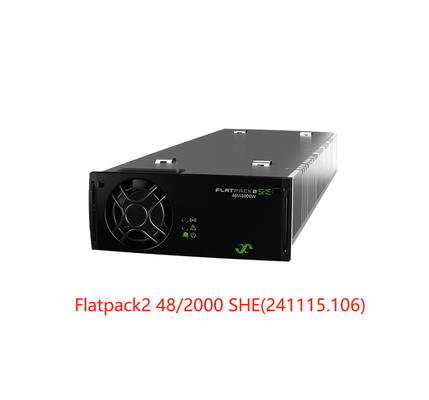
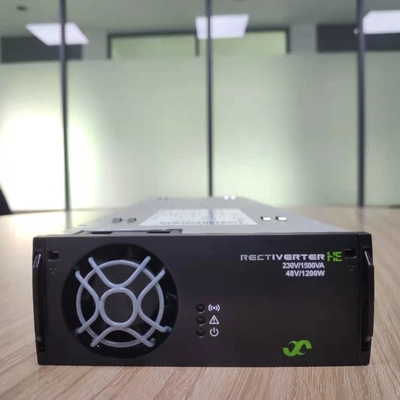
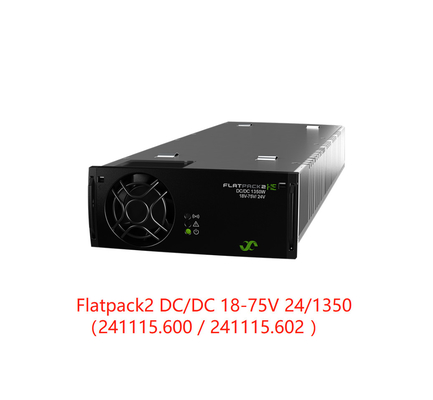
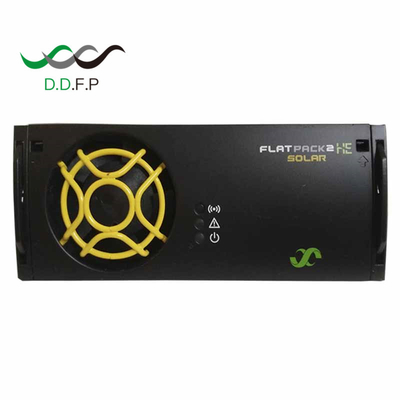
Utilizing 380VDC as the transmission voltage and deploying the Flatpack2 DCDC Conversion System at the edge—near the load—is the industry-recognized optimal selection path.
1. High-Precision Static Voltage Regulation
To ensure that communication chipsets operate within their optimal voltage envelope, the Flatpack2 system delivers a static voltage regulation of ±0.5%.
· Parametric Logic: Even if the 380V high-voltage bus fluctuates wildly between 260V and 400V due to long-distance transmission or front-end instability, the output remains precisely locked at a default 54.5 VDC. This high-precision regulation eliminates voltage inconsistencies across decentralized sites, providing a "constant-voltage" power environment for back-end equipment.
2. Dynamic Performance for Burst Workloads
Distributed computing tasks, such as 5G core networks or AI inference nodes, are highly concurrent. This requires a power system with superior dynamic adjustment capabilities.
· Parametric Evidence: Under a load step change from 10% to 90%, the system’s dynamic regulation recovery time is less than 50ms (Datasheet Page 2). This ensures that when a decentralized node suddenly enters full-load status, voltage fluctuations are rapidly suppressed within ±5.0%, preventing system crashes due to transient undervoltage.
Modular Redundancy and Remote Management Consistency
Another key to solving distribution bottlenecks is minimizing manual on-site intervention.
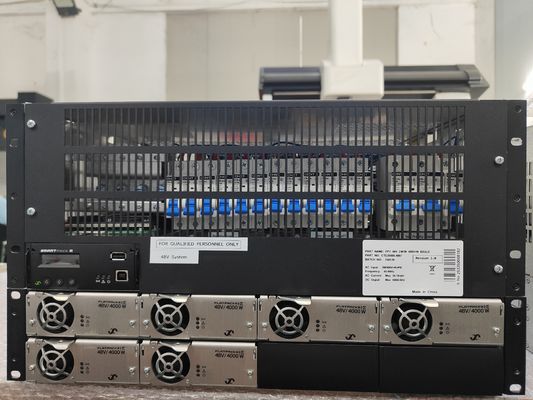
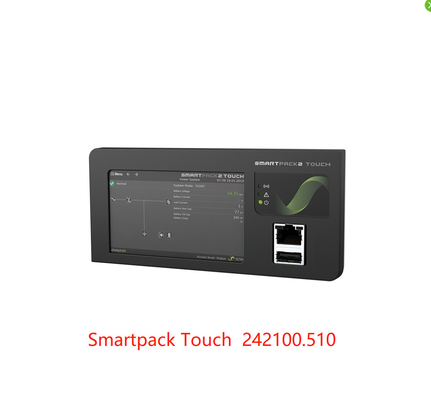
· Intelligent Sharing Logic: Powered by the Smartpack2 controller, the system achieves current sharing precision within ±5% of the maximum current across modules. This ensures that load is evenly distributed among multiple cabinets in a decentralized deployment, preventing localized overheating of individual modules.
· Digital Monitoring: Via SNMP/MODBUS protocols, the voltage, current, and thermal status of decentralized sites are transmitted back to a centralized operations center. Maintenance personnel can remotely adjust output voltages (range: 50V-55V) without visiting the site, achieving standardized O&M across different geographic zones.
Technical Selection Conclusion
By integrating the Flatpack2 DCDC system at the edge of high-voltage transmission lines, operators not only overcome the physical bottlenecks of voltage drop in decentralized cabling but also leverage its 98.2% conversion efficiency and industrial-grade stability to reduce total life-cycle OPEX. For decentralized facilities prioritizing reliability, the "High-Voltage Transmission + Precision Edge Conversion" architecture is the definitive choice for balancing cost and performance.


 Your message must be between 20-3,000 characters!