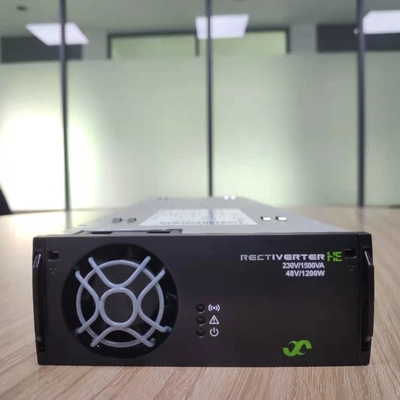
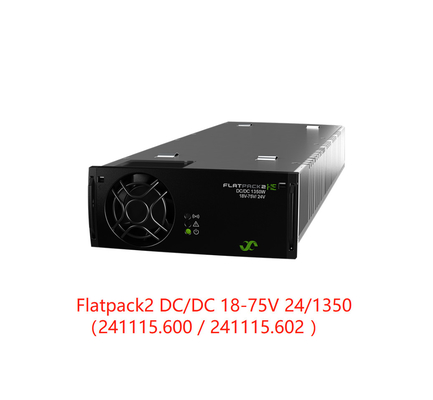
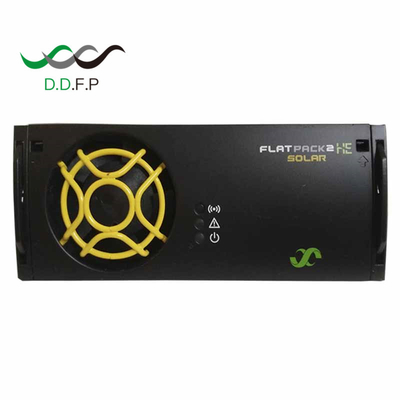
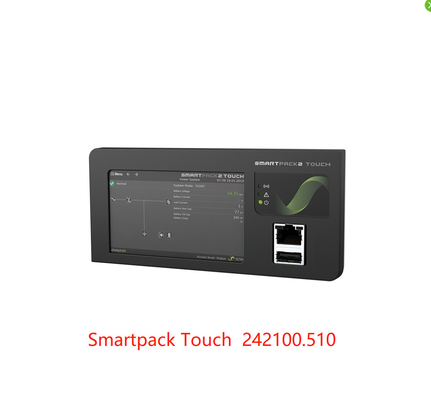
In the construction of contemporary edge computing deployments, micro datacenters, and corporate compact IT server rooms, the available chassis depth of enclosure racks poses an exceptionally strict challenge to the configuration of backup power architectures. The internal physical depth of many standard network enclosures, front-access structured cabling racks, or wall-mounted edge server cabinets is frequently restricted between 600 mm and 800 mm. Conventional centralized inverters or full-scale online UPS systems, burdened by excessive physical depths typically exceeding 700 mm or even 900 mm, are structurally incompatible with these shallow rack form factors, while also stripping away the critical bending radii and cooling pathways needed for telecom signal cables. This technical analysis explores how modular inverter systems engineered with an ultra-short depth profile of 435 mm empower high-density datacom spaces to eliminate severe spatial bottlenecks.
Physical Interference and Airflow Obstrucions Inside Shallow Enclosures
To economize on premium square-footage lease fees or to adapt power equipment into preexisting, narrow structural utility alcoves, shallow cabinet profiles are being heavily integrated into micro IT server rooms and localized telecom hubs. Within these dense physical envelopes, the structural depth specification of an inverter system represents a rigid engineering metric that holds far greater design priority than its vertical rack unit height.
If a backup power system possesses an excessive depth profile, forcing its integration into a shallow chassis drives its rear mechanical interface directly against the cabinet's back ventilated door. This installation anomaly triggers three destructive engineering complications. First, by compressing the internal open volume, high-gauge AC/DC power input cables and shielded high-frequency telecom buses are stripped of their mandatory mechanical bending radii. This places severe, sustained structural shear stress on electrical connection terminals, establishing high-resistance paths or potential electrical arcing hazards. Second, a rear casing compressed tightly against a enclosure panel significantly elevates static backpressure, obstructing internal dual-axial cooling fans and accelerating thermal junction stress across primary power semiconductor devices. Finally, the bulky physical profile disrupts organized hot/cold aisle containment mechanics throughout the server rack, creating localized thermal pockets that force adjacent compute blades into emergency thermal throttling or sudden hardware resets.
Strategic Engineering Synergy of the 435mm Ultra-Short Depth Profile
Implementing modular inverters engineered specifically with a 435 mm ultra-short depth and a 2RU vertical footprint delivers a standardized engineering methodology to negate physical interference within shallow server enclosures. This tailored mechanical envelope introduces extensive structural optimization benefits across the entire rack assembly.
Because the physical depth of both the sub-rack chassis and the matching inverter modules is capped tightly at 435 mm, installing the hardware into standard 600 mm network enclosures or 800 mm high-density server cabinets preserves an expansive open net rear volume of 165 mm to 365 mm, respectively. This generous spatial clearance permits field installation technicians to cleanly route primary AC/DC power connections, ensuring all high-gauge conductors easily maintain their code-compliant, natural bending radii. Furthermore, this open layout provides a dedicated, unimpeded physical pathway for high-speed IT signaling cables, patch cords, and fiber optoelectronics, establishing definitive physical separation between low-voltage signal paths and high-voltage power lines to negate electromagnetic cross-talk. Most importantly, the expanded rear net volume completely eliminates exhaust restriction, allowing the inverter modules' integrated forced-air cooling systems to smoothly expel ambient heat, thereby lifting the aerodynamic thermal efficiency of the host server enclosure.
Critical Inverter Selection Parameters for Compact High-Density Datacom Hubs
To maintain continuous system stability, output consistency, and exceptional volumetric power densities within highly restricted shallow physical envelopes, procurement engineers must evaluate product lines against precise quantitative benchmarks:
· Volumetric Spatial Constraints: Inverter modules must be dimensionally optimized for standard 19-inch rack frames, capping the vertical footprint at 2RU (103 mm in height) and restricting the total structural depth strictly to ≤ 435 mm. Individual modules must possess a lightweight profile of approximately 4.3 kg. A single sub-rack shelf must consolidate multiple parallel modules to deliver an AC output capacity up to 12 kVA / 9.6 kW within this 2RU envelope.
· Empirical Static and Dynamic Voltage Regulation: Under volatile IT server load-stepping conditions, the steady-state AC output voltage deviation must be strictly locked within ±1% during abrupt step changes between 10% and 100% load profiles. During massive 0% to 100% transient load impacts, the dynamic voltage variance must be restrained under <5% and recover fully back to equilibrium within 100 ms.
· Waveform Quality and Electrical Conversion Efficiencies: To properly support non-linear electrical profiles common to Switch-Mode Power Supplies (SMPS) inside compute nodes, the inverter must supply a pure sine wave with a total harmonic distortion (THD) < 3% at rated load. Operating under AC-to-AC Enhanced Power Conversion (EPC) modes, the comprehensive runtime efficiency must surpass >96%, driving down localized heat generation within the dense enclosure.
· Mechanical Integrity and RoHS Compliance: To reliably endure continuous high-frequency vibrations induced by multi-fan cooling configurations inside server cabinets, module chassis shells must be constructed from highly durable, anti-corrosive Aluzinc Steel. The entire electrical and mechanical assembly must be fully compliant with RoHS directives and certified under EN300386 industrial-grade EMC criteria.
Autonomic ECI Modular Parallelism Driving Near-Zero MTTR Workflows
Because remote edge sites and localized compact IT rooms typically operate without specialized, round-the-clock onsite field engineering teams, an inverter system’s native redundancy and plug-and-play serviceability represent critical operational requirements.
2RU modular inverter systems leverage advanced ECI (Enhanced Power Conversion) technology, permitting up to 32 independent modules to interface within an online parallel matrix while completely eliminating any single point of failure. If an individual module encounters internal semiconductor wear and disconnects from the parallel bus, the remaining healthy online units immediately redistribute the load current, preserving continuous AC power with a 0-second (0 sec) transfer performance. Because each discrete module weighs a manageable 4.3 kg and utilizes a toolless, blind-mate hot-swappable interface, local non-technical facility operators can securely extract a compromised unit and slide in a replacement module within two minutes. This replacement process is executed during live system operation (Live System Operation) without engaging a manual bypass or interrupting power to critical server lines. This simplified workflow reduces system Mean Time to Repair (MTTR) to near-zero margins, addressing the operational risks associated with remote field site maintenance.


 Your message must be between 20-3,000 characters!