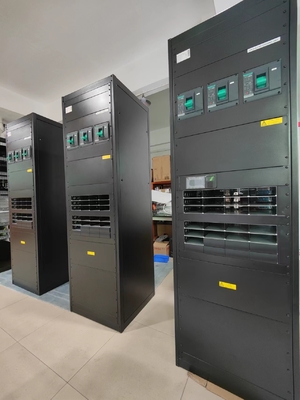
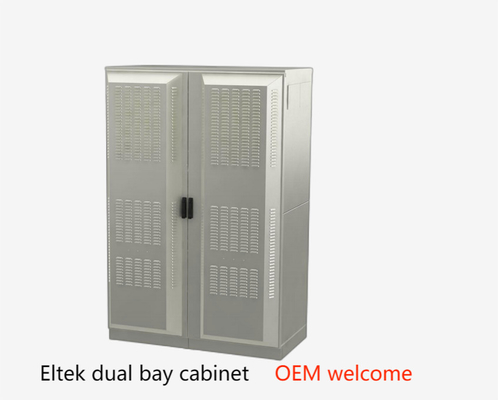
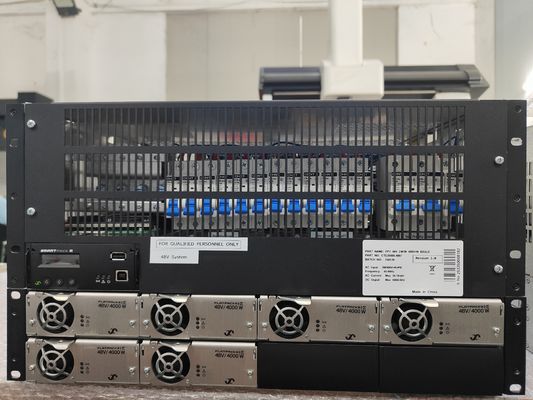
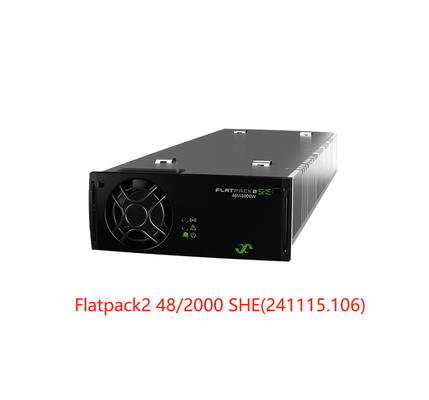
As European datacenters evolve toward intense computing densities, the rental costs of facility floor space in core hubs such as Frankfurt, London, and Amsterdam rise steadily year over year. When deploying edge computing nodes and enterprise IT server rooms, operations managers face rigid cabinet space constraints while maintaining stringently redundant AC backup power for critical infrastructure. Engineering power solutions that minimize the physical footprint without sacrificing system reliability has become a primary objective in European facility design and component selection.
Physical Footprint Bottlenecks and Thermal Challenges in High-Density IT Environments
Modern European IT rooms are rapidly progressing toward per-cabinet power densities of 10kW and above, leaving standard 19-inch server racks nearly saturated with high-speed blade servers, network switches, and storage gateways. Traditional centralized UPS systems or massive standalone industrial inverters are dimensionally bulky, often requiring dedicated floor-standing enclosures or consuming up to 6RU to 10RU of valuable chassis space within a server rack.
This excessive physical displacement directly reduces the available slot capacity intended for revenue-generating IT equipment. Furthermore, bulky power components severely obstruct optimal airflow distribution. Within highly engineered hot/cold aisle containment facilities, oversized power systems disrupt cold air delivery and increase static pressure for precision cooling units, leading to localized thermal hot spots. Consequently, sourcing a high-power-density, compact inverter solution that retains comprehensive redundancy is critical to mitigating both spatial and thermal constraints.
How 2RU Compact Designs Reclaim Valuable Cabinet Form Factors
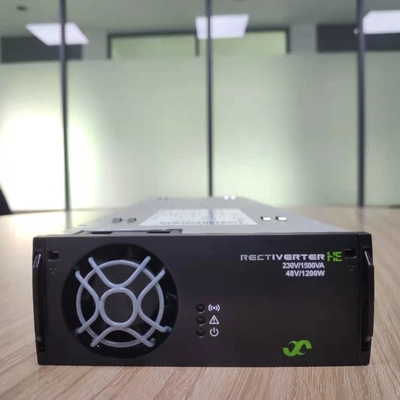
Implementing a modular inverter system with a 2RU profile (approximately 103 mm in height) delivers a standardized engineering methodology to overcome spatial challenges in high-density IT rooms. This streamlined physical architecture permits site technicians to integrate the inverter power stage directly into existing 19-inch IT enclosures, eliminating the spatial requirement for separate, external electrical distribution cabinets.
Under this footprint-optimized configuration, individual inverter modules maintain a compact depth of 435 mm and a structural weight of just 4.3 kg. A single sub-rack shelf, while occupying a mere 2RU vertical slot, can house multiple parallel inverter units to deliver up to 12 kVA of continuous AC output. This spatial efficiency reclaims high-value U-space, allowing data centers to maximize server deployment density within fixed physical boundaries, thereby lowering the total operational expenditure (OPEX) per rack unit.
Critical Inverter Selection Parameters for Space-Constrained Facilities
To ensure long-term operational consistency and stability under high physical density, procurement engineers evaluating compact IT room inverter hardware must strictly analyze the following engineering specifications:
· Dynamic and Static Voltage Regulation: Under volatile load-switching conditions, the AC output voltage stability must be strictly locked at ±1% during steady-state load steps between 10% and 100%. Under severe 0% to 100% transient load impacts, the dynamic voltage regulation must remain <5% and recover fully within 100 ms.
· Total Harmonic Distortion and Waveform Quality: To properly support the switch-mode power supplies (SMPS) utilized in high-performance servers, the inverter must supply a pure sine wave with a total harmonic distortion (THD) < 3% at rated output. It must also feature a crest factor capability of 3:1 to guarantee consistent operation under non-linear electrical loads.
· Material and Protective Compliance: The module casing must consist of RoHS-compliant Aluzinc Steel to prevent structural deformation under continuous high temperatures and multi-fan vibrations inside dense cabinets. Additionally, the system must hold industrial EN300386 EMC certification to prevent electromagnetic interference from bleeding into adjacent high-frequency telecom signaling lines.
· High-Efficiency EPC Mode: The equipment must achieve a thermal efficiency rating of >96% when operating in AC-to-AC Enhanced Power Conversion (EPC) mode. This minimized conversion loss dramatically curtails heat dissipation, lowering the ambient thermal cooling load inside the enclosed rack environment.
Scalable Parallel Architectures Ensuring Flexible Capacity Expansion
Another distinct characteristic of European high-density IT facilities is the modular, organic expansion of business operations. Conventional centralized power systems compel operators to absorb significant upfront capital investments and reserve expansive physical footprints at the earliest phases of a project based on distant future capacity forecasts.
Conversely, a 2RU modular inverter system aligns with a "pay-as-you-grow" scalable deployment model. Its core ECI technology enables the online parallel integration of up to 32 inverter modules. During initial deployment phases with lower load profiles, operations teams can provision just one or two modules. As compute demands scale upward, field personnel can scale system capacity—up to 1.35 MVA using external synchronization—via hot-swappable installation without interrupting active AC loads. This flexible expansion strategy mitigates upfront capital expenditure (CAPEX) pressures while aligning space utilization with optimal return on investment (ROI).


 Your message must be between 20-3,000 characters!