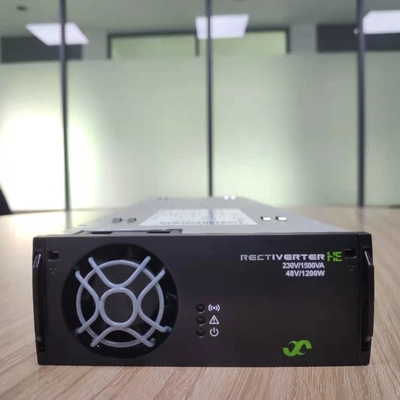
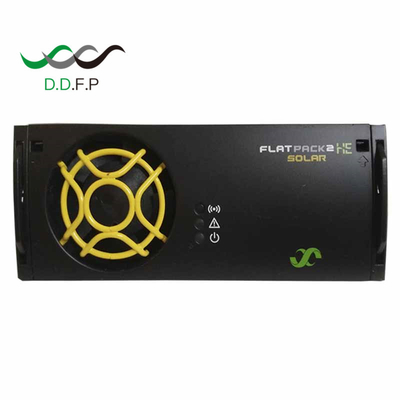
In the operation of North American telecommunications infrastructure, power system reliability is determined not only by conversion efficiency but also by robustness against grid surges, extreme climates, and complex electrical interference. As 5G base stations and edge computing nodes expand into outdoor and high-altitude regions, 4.2 kVDC galvanic isolation has become a mandatory technical benchmark for power system selection.
Why 4.2kV Isolation is Critical for North American Sites
North America spans vast territories, with many communication sites located in lightning-prone areas or remote regions with unstable grids. Without a sufficient electrical barrier, any transient surge or ground fault on the high-voltage side (380VDC bus) could penetrate electronic components, leading to catastrophic failure of expensive terminal servers.
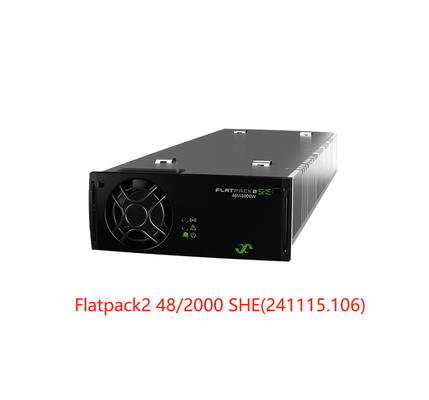
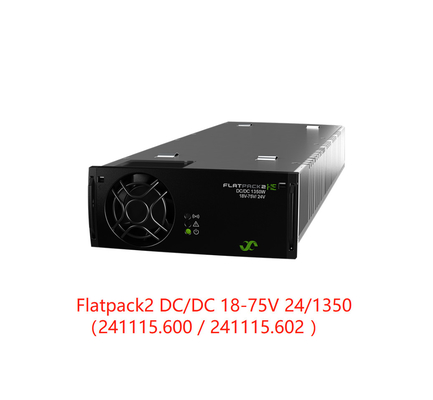
· Isolation Specification: The Flatpack2 DCDC system provides an input/output isolation of 4.2 kVDC. This high-strength galvanic isolation ensures complete decoupling between the high-voltage transmission layer and the low-voltage load layer.
· Safety Compliance: Adhering to IEC/EN 60950-1 safety standards, this isolation level effectively blocks common-mode interference and prevents cascading damage triggered by high-voltage bus faults.
Performance Under Extreme Operational Conditions
System stability is further demonstrated by its resilience to physical environmental stressors.
1. Wide Temperature Operation and Power Consistency
From the freezing temperatures of Alaska to the scorching heat of Arizona, North America experiences massive thermal gradients.
· Environmental Endurance: The system operates at full load within a range of -20°C to +45°C, with storage temperature limits reaching +85°C (Datasheet Page 2).
· Thermal Management: Utilizing SHE technology with 98.2% conversion efficiency, internal heat generation is minimal. Under high-ambient-temperature conditions, its superior power derating curve ensures consistent power delivery during summer peak loads.
2. Dynamic Regulation and Precision Stability
In harsh electrical environments, loads often fluctuate violently.
· Transient Response: During a 10% to 90% load step change, the ±5.0% dynamic voltage regulation ensures the system recovers to a stable state in less than 50ms. This rapid response is vital for maintaining the continuity of 5G macro sites and precision computing hardware.
· Regulation Accuracy: A static regulation of ±0.5% ensures that even if the 380V input fluctuates due to long-distance distribution drops, the terminal 54V output remains precise and consistent.
Selection Guide: Evaluating "Long-Term Reliability"
For North American procurement teams, the following "Hard Checklist" is recommended for site power selection:
1. Isolation Integrity: Does the system provide 4.2kVDC physical isolation?
2. Efficiency Benchmark: Does the peak conversion efficiency reach 98.2% to minimize thermal stress?
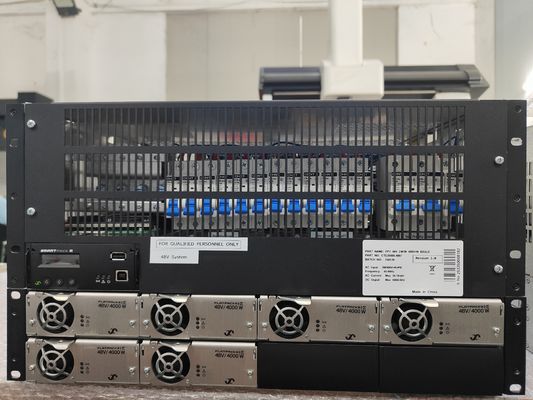
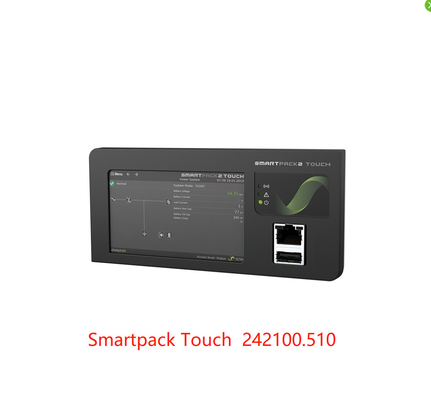
3. Intelligent Monitoring: Is it equipped with a controller like the Smartpack2 for real-time earth fault detection?
Industry Conclusion
In the North American telecom power landscape, 4.2kV isolation and wide-temperature stability are not just vanity metrics—they are the "fuses" preventing service outages. The Flatpack2 DCDC system, through its extreme electrical performance and industrial-grade resilience, provides a solid power barrier for high-reliability communication networks.


 Your message must be between 20-3,000 characters!