H2: Technical Mechanics of High-Frequency Ripple and Non-Linear Load Interference on Solar DC Busbars
During the standard operations of off-grid telecom base stations and distributed industrial edge nodes, direct-coupled solar photovoltaic (PV) arrays output highly dynamic, non-linear currents heavily influenced by changing irradiance, sudden thermal shifts, and rapid cloud movement. When the PV input voltage spikes erratically across a broad 85 VDC to 420 VDC spectrum, legacy charging equipment lacks the switching frequency agility required to sustain the internal circuit's dynamic balancing.
This unstable input propagates deeper into the infrastructure, injecting substantial high-frequency switching ripples and high-order harmonic interferences onto the primary -48VDC output busbar. High-sensitivity Remote Radio Units (RRUs), high-speed microwave backhaul gear, and telemetry telemetry data sensors terminating at the DC busbar demand absolute voltage purity. If the peak-to-peak high-frequency ripple metrics overshoot strict limits, the interference pulses will directly couple into the wireless signal paths, degrading the Signal-to-Noise Ratio (SNR), escalating packet loss rates, and even driving communication control logic cards into high-frequency thermal lockups.
H2: Core Engineering Selection Guide for Flatpack2 48/3200 HE Solar Chargers
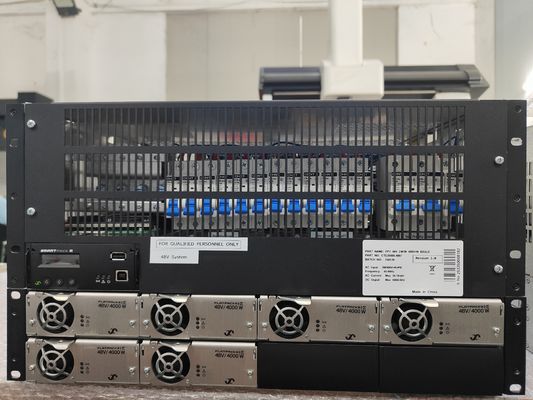
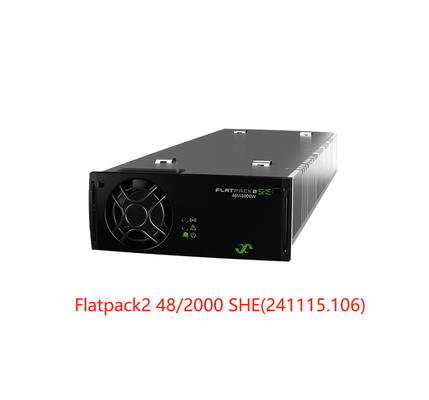
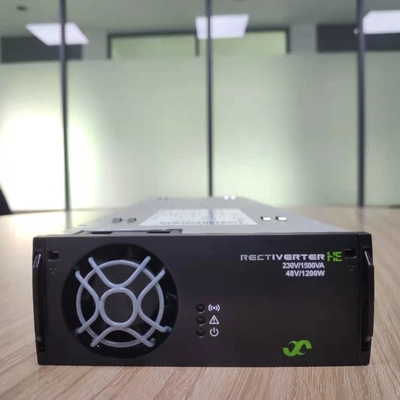
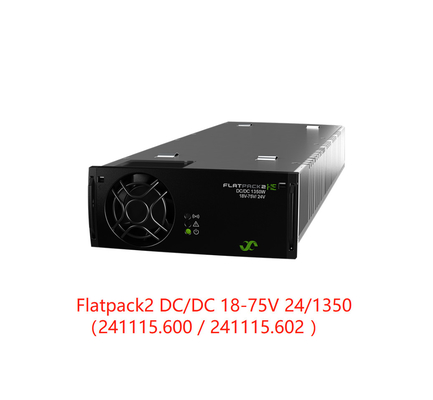
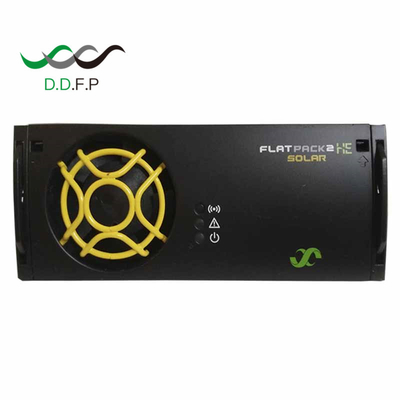
To counteract switching ripples caused by sub-standard solar inputs and secure downstream telecommunication pathways, DC power system integrators must strictly scrutinize inductive filtering and passive harmonic suppression metrics at the individual charger module tier. Solar charging modules engineered around the Flatpack2 48/3200 HE Solar topology present exact parameterized baselines for industrial-grade procurement evaluation:
H3: 1. Wide MPPT Current Limitation and Dynamic Rectification Attenuation
- Wide Voltage Range with Precise Sourcing Control: The power module natively handles an extended DC operational range spanning from 85 VDC up to 420 VDC. Concurrently, the integrated internal hardware strictly clamps the maximum DC input current to a ceiling of 20 ADC.
- High-Frequency Filtering and Energy Smoothing: Across its core 100 VDC to 380 VDC Maximum Power Point Tracking (MPPT) window, the module leverages multi-tier, heavy-duty high-frequency LC filters. This high-frequency switch ripple suppression engineering dynamically attenuates DC surges caused by sudden sunlight shifts within nanoseconds. Even during extreme events where the solar array input voltage spikes instantly, output ripple and noise indices remain firmly within carrier-grade limits (typically dropping below 2 mV psophometrically weighted).
H3: 2. Advanced Physical Thermal Architecture and -40°C to +55°C Ambient Resilience
- Forced Front-to-Back Air Cooling: The charger features a completely sealed enclosure augmented by an internal, long-lifespan front forced air-cooling fan assembly. This targeted design quickly limits heat accumulation across the high-frequency transformer and inductors while preventing desert dust particles or moisture from precipitating onto the primary PCB.
- Continuous Thermal Management: The sub-assembly reliably sustains a full 3200W rated output across a punishing -40°C to +55°C temperature window, guaranteeing that the telecom network functions 24/7/365 under the overlapping stresses of intense desert heat and erratic power fluctuations.
H2: Digital Synchronization Schedulers for Multi-Module Parallel Ripple Cancellation
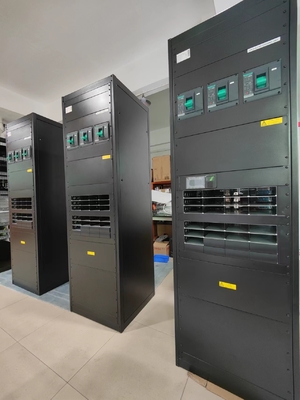
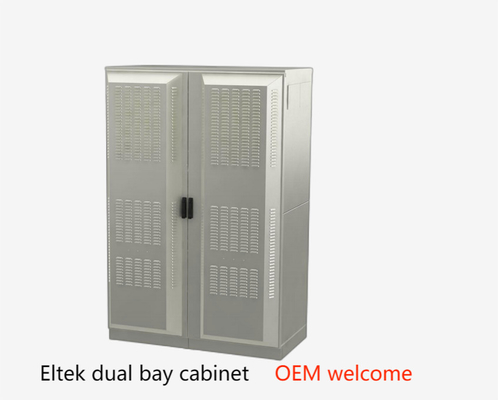
When scaling infrastructure for high-capacity edge nodes—such as heavy-duty base station enclosures engineered for 300A or 500A maximum busbar currents—relying entirely on passive individual module filters is often inadequate to suppress harmonic accumulation from massive multi-module arrays. Under these conditions, the digital control matrix becomes the core mechanism for enforcing power quality stability.
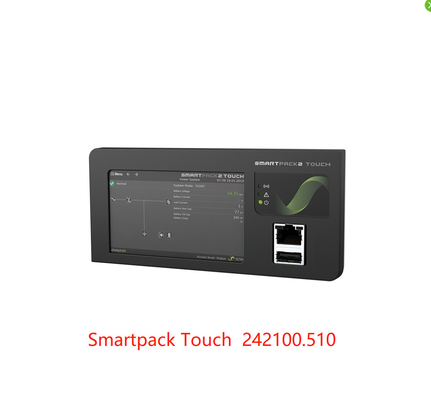
Utilizing native onboard Ethernet linkages, the embedded Smartpack2 Touch system controller monitors real-time output impedance and wave dynamics across parallel Flatpack2 48/3200 HE Solar chargers. By executing specialized digital interleaved switching logic, the control layer slightly offsets the PWM switching phases of the interconnected modules, forcing their respective high-frequency switching ripples to cancel one another out directly on the DC busbar. Field infrastructure managers can monitor DC busbar purity, active power output, and Total Harmonic Distortion (THD) via any standard web browser, significantly strengthening the resistance of distant edge nodes against non-linear load interferences.


 Your message must be between 20-3,000 characters!