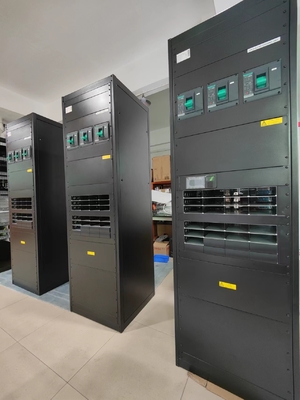
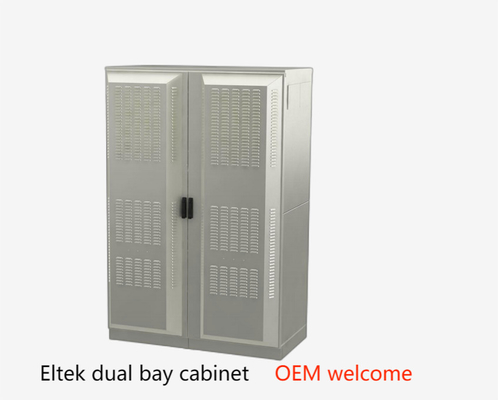
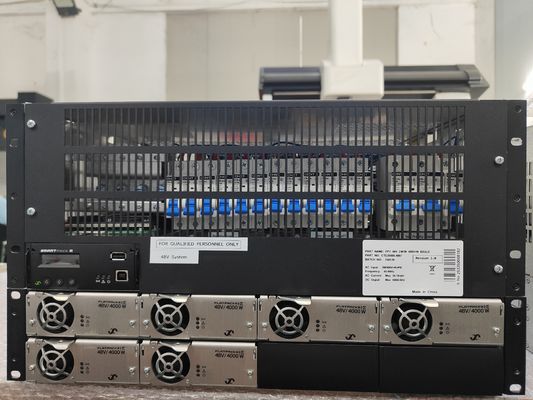
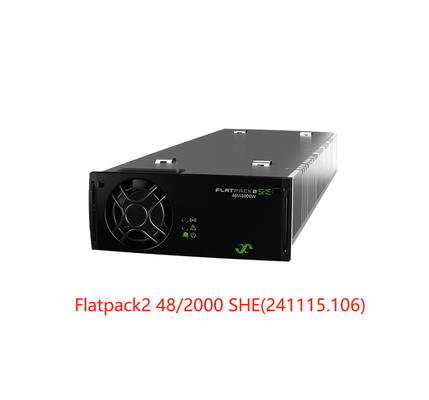
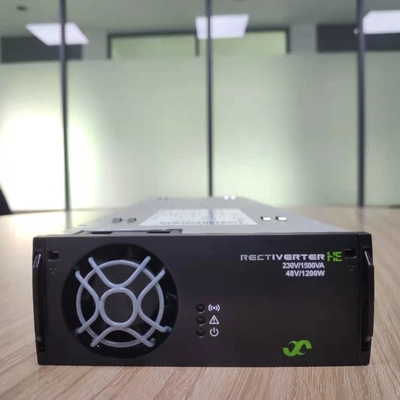
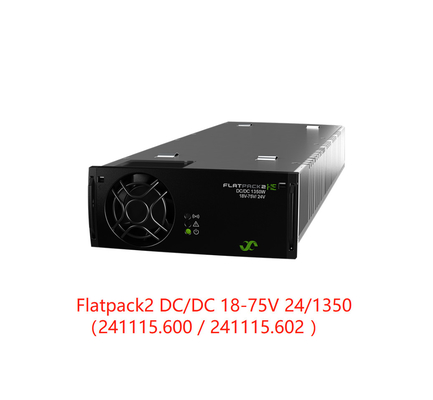
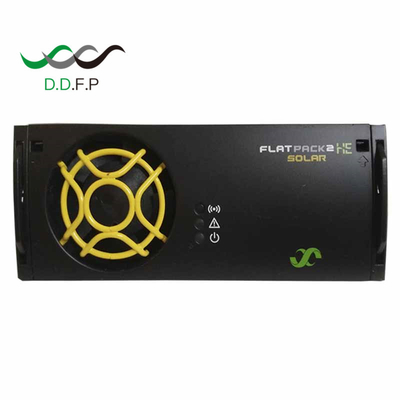
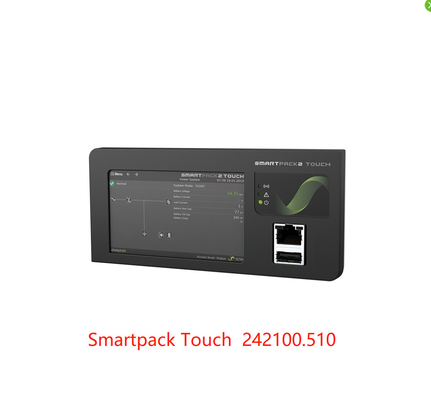
In South Africa’s industrial regions and remote mining sectors, severe power grid anomalies—characterized by chronic undervoltage, abrupt voltage sags, and recurrent load shedding—pose an ongoing hazard to electrical substations. When subjected to large-scale grid brownouts, legacy industrial inverters with restrictive input limits are routinely forced to default to battery discharge modes. This persistent cycle accelerates the thermal degradation and aging of backup storage batteries, placing the operational integrity of the entire secondary protection network at serious risk. This technical选型 selection guide examines how implementing modular inverters with wide AC input windows guarantees long-term output consistency and continuous uptime under highly volatile utility grids.
Subtle Operational Hazards of Narrow-Input Inverters in Undervoltage Environments
To insulate sensitive internal circuitry from stress, conventional industrial inverters generally restrict their lower AC input thresholds to standard margins between 180 Vac and 190 Vac. Within South African substations, however, the dynamic engagement of primary main transformers or the cycling of massive industrial motor loads frequently drags the local utility line voltage down to deep, unexpected lows.
Under these conditions, legacy single-enclosure inverters categorize the low line voltage as "out-of-bounds" and isolate the grid path, routing the critical load directly to the station battery banks tied to the 48Vdc DC bus. This high-frequency toggling between shallow and deep battery discharge cycles generates a destructive cumulative thermal effect, destabilizing the operational lifespan of lead-acid or lithium battery strings. Furthermore, mechanical or static switching operations risk injecting phase displacement lag or microsecond-level voltage interruptions into business-critical secondary devices (such as protection relays and RTU terminals), compromising utility control grids.
Strategic Engineering Value of Wide AC Input Tolerances under Harsh Grids
To mitigate severe voltage sags or transient overvoltage conditions, procuring modular inverters engineered with expanded AC input windows is crucial to achieving high substation availability. Advanced decentralized power modules feature a heavily fortified input spectrum, remaining online and operational across a wide voltage range of 150 Vac to 293 Vac L-N.
The technical benefit of this design manifests when a substation sustains a transient overvoltage surge up to 293 Vac, or a severe load-induced sag down to 150 Vac. Rather than isolating the utility grid, the inverter module remains firmly tied to the AC line. Its internal, dynamic Enhanced Power Conversion (EPC) circuitry continuously modulates the internal conversion ratio, supplying stabilized power without draining critical station batteries. If the voltage drops directly past 150 Vac, the system enforces a linear brownout power derating (e.g., delivering 1600 W at 150 Vac, linearly increasing to 2400 W at 195 Vac). This protects the substation's battery infrastructure and eliminates the voltage transient disruptions associated with recurring power path switching.
Critical Inverter Engineering Parameters for South African Power Substations
To ensure newly deployed inverter infrastructure can withstand dusty environments, high electromagnetic interference, and degraded grid profiles, engineering procurement teams must evaluate hardware choices against strict quantitative specifications:
· AC Input and Output Steady-State Thresholds: The system must hold an input tolerance of 150 - 293 Vac L-N, while its DC port must integrate with standard 48 Vdc (operating spectrum: 32 - 63 Vdc) industrial battery buses. Throughout these input swings, the steady-state AC output voltage deviation must remain within ±1% with a total harmonic distortion (THD) < 3%, guaranteeing a pure pure sine wave delivery.
· Zero Transfer Performance and Transient Recovery: During sudden utility dropouts, the system's maximum voltage interruption time and total transient voltage duration must be exactly 0 seconds (0 sec). Simultaneously, the load impact recovery time during 10% to 90% load steps must remain ≤ 0.4 ms to prevent microcomputer protection relays from misoperation.
· Environmental Survivability and Industry Standard Qualifications: The hardware must be certified against ETS300-019-2-3 Class 3.1 (operational testing) and GR3108 Class 2 outdoor/harsh environment criteria. The system must operate reliably across a temperature threshold of -20°C to 65°C (with derating applied above 40°C) and under 95% non-condensing relative humidity for up to 96 hours annually.
· Extended Hardware Lifespan and Mechanical Shell Specs: Evaluated under military standard MIL-217-F protocols at 30°C ambient and 80% continuous running load, the individual module MTBF must exceed 240,000 hours. The physical sub-rack must fit within a compact 2RU envelope and feature an anti-corrosive, highly durable Aluzinc Steel outer casing.
Operational Advantages of Modular Parallelism and Hot-Swappability at Remote Sites
A significant portion of South Africa's industrial substations are situated in isolated mining or extraction sectors where transit infrastructure is minimal, leading to original equipment manufacturer (OEM) technical support response windows that span several days. If a conventional monolithic inverter's central control logic board is compromised by a lightning-induced surge, the entire station backup layer fails immediately, complicating field remediation.
Conversely, a 2RU modular inverter system utilizing decentralized ECI architecture permits up to 32 modules to run in an online parallel matrix, eliminating any single point of failure. If an individual module is compromised during severe electrical storms, the remaining parallel units instantly redistribute the load currents to keep the substation active. Because each individual inverter module weighs a manageable 4.3 kg and utilizes a toolless hot-swappable configuration, a standard onsite plant electrician can safely extract the compromised module and slide in a spare within two minutes. Crucially, this operation occurs during live system operation (Live System Operation) without shutting down power or isolating the active AC loads. This plug-and-play methodology reduces the substation MTTR to near-zero margins, addressing the operational risks associated with remote field site maintenance.


 Your message must be between 20-3,000 characters!