With the rollout of edge computing and 5G networks, Containerized Data Centers have become a mainstream choice for infrastructure in regions like the Middle East due to their rapid deployment and mobility. However, physical space inside a container is extremely limited. How to achieve high-density power integration and thermal balance while ensuring redundancy is the core challenge engineers face during the selection stage.
The Space Premium: Why High Power Density Matters?
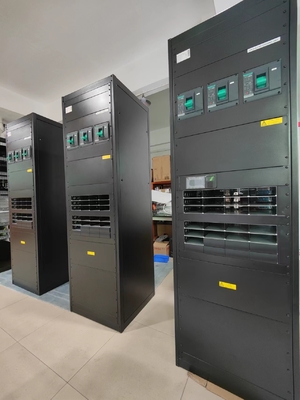
Inside a standard container (20ft or 40ft), space for power systems is minimal after accounting for server racks and cooling units. Traditional power architectures are often bulky, leading to heat accumulation and occupying valuable IT equipment real estate.
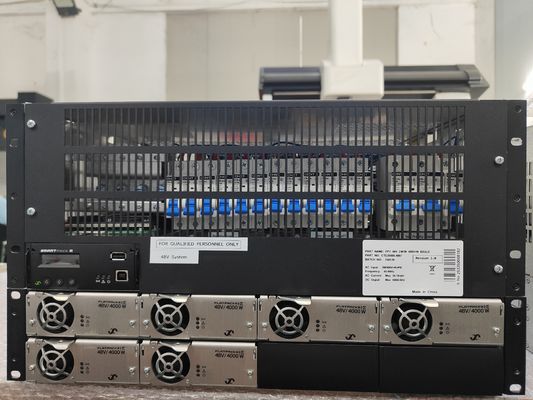
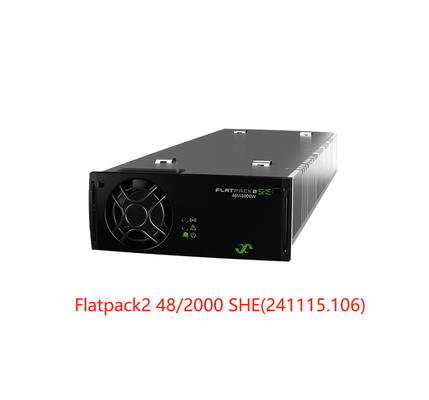
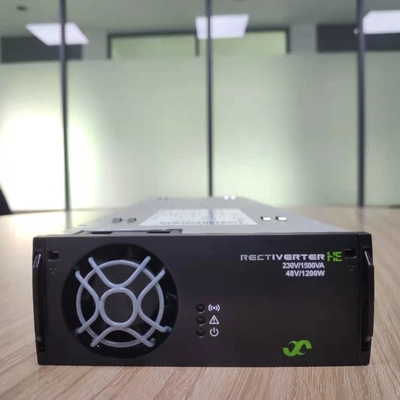
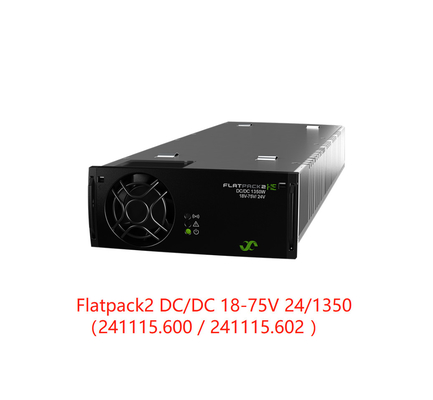
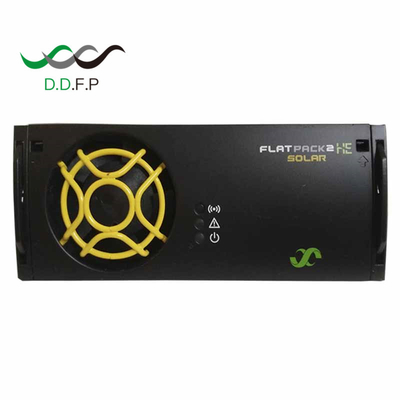
· The 1U Modular Advantage: Flatpack2 modules, with their compact 1U height design, deliver exceptionally high power output within minimal vertical space. This allows operators to integrate more rectifiers in the same cabinet, reserving physical space for future expansion.
· Simplified Cabling Architecture: The system supports front-to-back maintenance, fitting the tight layouts of containers where equipment is often flush against walls, significantly enhancing floor space utilization.
Technical Foundation: Stability Through Parametric Evidence
Inside a high-density container, stability depends on specific physical parameters rather than just brand reputation:
1. Extreme Power Density: Flatpack2 HE modules provide an output range of 3000W to 4000W within a compact frame. High efficiency (>96%) directly reduces waste heat emissions, which is critical for container environments under intense cooling pressure.
2. Thermal Management & Derating: The system maintains full power output even when internal container temperatures reach +55°C. The optimized internal airflow ensures rapid heat dissipation, preventing "hot spots" common in high-density stacking.
3. Isolation & Safety Protection: Featuring 2.1 kVDC galvanic isolation, the system is well-suited for steel-structured containers sensitive to static and surges. This isolation effectively blocks external electrical noise from reaching sensitive communication backplanes.
Intelligent Monitoring: The Role of Smartpack2 in Complex Environments
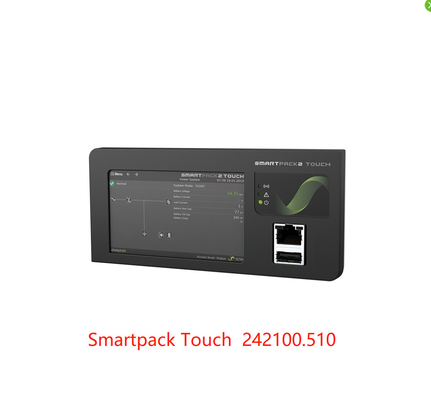
Containerized data centers are often unmanned. The Smartpack2 controller provides a comprehensive monitoring solution:
· Remote Health Diagnostics: Real-time reporting of module current, voltage, and temperature via SNMP or Modbus enables predictive maintenance.
· Load Scheduling Optimization: During IT load fluctuations, the controller adjusts the number of active modules to ensure the system always operates within its peak efficiency range, further lowering the container's PUE (Power Usage Effectiveness).
Conclusion: High-Density Power as the Foundation of Edge Computing
For containerized facilities pursuing rapid deployment and high space ROI, power system selection must go beyond raw capacity. The Flatpack2 system, with its parametric reliability and extreme space efficiency, resolves the structural conflict between "limited space" and "high power demand," making it the ideal foundation for digital transformation in the Middle East and beyond.


 Your message must be between 20-3,000 characters!