In the remote regions of Europe and North America—from the high-latitude terrains of Scandinavia to the vast rural stretches of the Midwestern United States—telecom infrastructure faces a unique set of energy challenges. Unstable "edge-of-grid" power lines, combined with extreme weather events, make traditional power backup systems insufficient. For modern operators, the focus has shifted from simple emergency backup to a resilient, Telecom Hybrid System capable of autonomous energy management.
The Infrastructure Gap: Why Remote Sites Face Frequent Outages
In many developed markets, while the urban grid is robust, the "last mile" of rural electrification often suffers from aging infrastructure. This leads to several technical pain points for base stations:
· Voltage Sag and Surge: Rural lines often experience significant voltage drops during peak local demand, triggering equipment shutdowns.
· Environmental Stress: Sites in Northern Europe or Canada must withstand temperatures below -20°C, while coastal sites face high humidity, both of which accelerate component failure.
· High Service Costs: Dispatching a technician to a remote mountain or forest site for a simple power reset can cost thousands of dollars in OPEX.
Technical Core: Building Resilience Through Hybrid Architectures
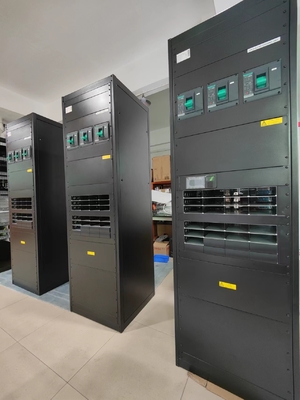
To ensure 99.99% uptime, a 16kW–24kW Telecom Hybrid System employs a multi-layered approach to power reliability. When evaluating systems for these regions, three technical pillars are essential:
1. Ultra-Wide Input Voltage Tolerance
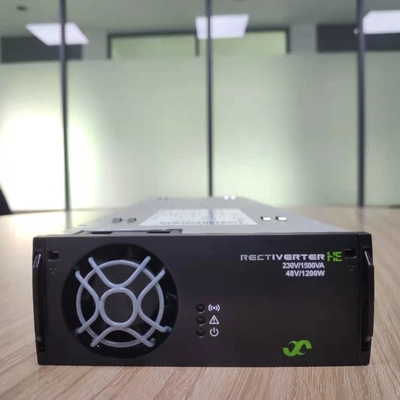
Standard power systems often disconnect when the grid fluctuates outside a narrow window. A mission-critical hybrid system must feature rectifiers with an operating range of 85V AC to 300V AC. This "parameter-driven" reliability ensures that even during severe brownouts, the system continues to provide a stable -48V DC output to the RAN (Radio Access Network) equipment without depleting battery reserves prematurely.
2. Intelligent Redundancy and Modular Design
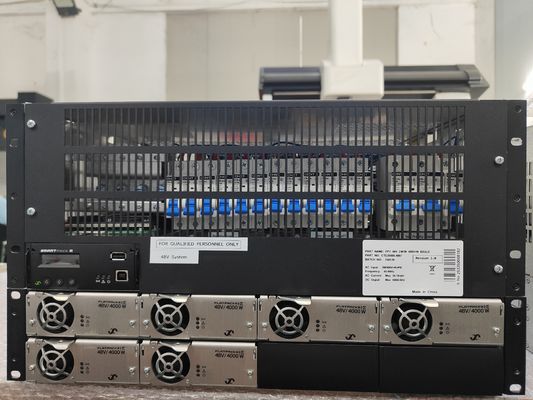
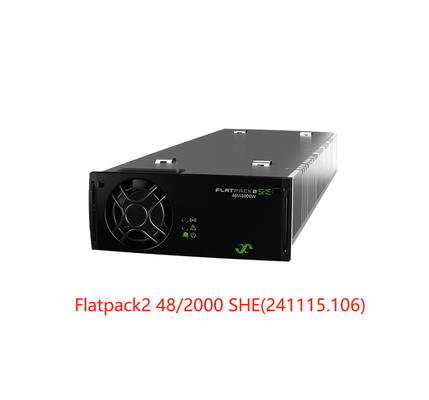
Reliability is built on the "N+1" or "N+2" redundancy principle. By utilizing hot-swappable modules, the system ensures that if one 3000W or 4000W rectifier fails, the remaining modules immediately compensate for the load. This modularity allows for "zero-downtime" maintenance—a critical requirement for sites where a total power loss would mean a complete loss of local emergency services (E911/112).
3. Hardened Environmental Protection (IP55/NEMA 3R)
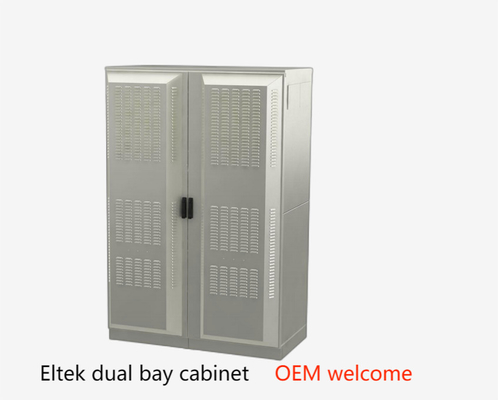
For indoor and outdoor remote deployments, the physical enclosure is as important as the electronics. Systems must be rated at IP55 to protect against wind-blown dust and moisture. Furthermore, integrated thermal management—using high-efficiency Heat Exchangers (HEX)—maintains an internal operating temperature of -40°C to +55°C, protecting the lifespan of high-density lithium batteries and sensitive fiber-optic gear.
Selection Guide: Stability Metrics for Procurement Teams
When drafting a Request for Proposal (RFP) for remote site power, technical buyers should demand the following evidence-based specifications:
|
Critical Metric
|
Performance Standard
|
Impact on Reliability
|
|
MTBF (Mean Time Between Failures)
|
≥ 300,000 Hours
|
Minimizes the probability of catastrophic site failure.
|
|
Surge Protection (SPD)
|
Class II (20kA/40kA)
|
Shields equipment from lightning strikes on long rural lines.
|
|
Battery Management (BMS)
|
Individual Cell Monitoring
|
Prevents a single weak cell from compromising the entire string.
|
|
Connectivity
|
SNMP v3 / RS485 / LTE
|
Enables remote "Dark Site" management and predictive alerts.
|
Industry Insight: The Role of "Active" Energy Management
The future of telecom power in Europe and North America lies in Active Energy Hubs. These systems do not just wait for the grid to fail; they actively monitor grid quality and "peak shave" using stored battery energy when the grid becomes unstable. This proactive stance significantly reduces the thermal and electrical stress on the base station's core components.
Conclusion
Transitioning to a Telecom Hybrid System is the most effective strategy for operators looking to eliminate blackouts in remote territories. By prioritizing wide-voltage tolerance, modular redundancy, and robust environmental shielding, telecommunications providers can ensure consistent connectivity regardless of grid stability or geographical isolation.


 Your message must be between 20-3,000 characters!